Underground Cable Locator CO
Something's not working, and you're fairly sure it's underground. HPLS locates underground cable faults across Colorado, electric, communications, and low-voltage lines alike, so you know exactly where to dig instead of tearing up half the yard guessing. Most faults get repaired the same visit they're found, which means one appointment instead of two.
Signs You Might Have a Fault
A tripped breaker or a dead outlet is usually simple. These are the ones that point underground instead:
- Power to a shed, garage, or barn cuts out with no storm and no obvious cause: If resetting the breaker doesn't hold, the break is likely somewhere between the panel and the building, not at either end.
- A breaker trips the instant you reset it, every time: That's usually a short to ground somewhere along the buried run, not a problem with the breaker itself.
- A well pump, sprinkler controller, or landscape lighting circuit stops working with nothing visibly damaged: The wire feeding it is the first place to check before replacing any equipment.
- Internet or cable service drops and your provider says the line tests fine at the pole: The problem is likely on the private side of the line, between the pole and your house, which isn't something they'll troubleshoot for you.
- One strip of lawn stays unusually wet, warm, or dead compared to the rest of the yard: That's sometimes a sign of a line arcing underground, and it's worth checking before you plant anything there.
Before You Start Digging
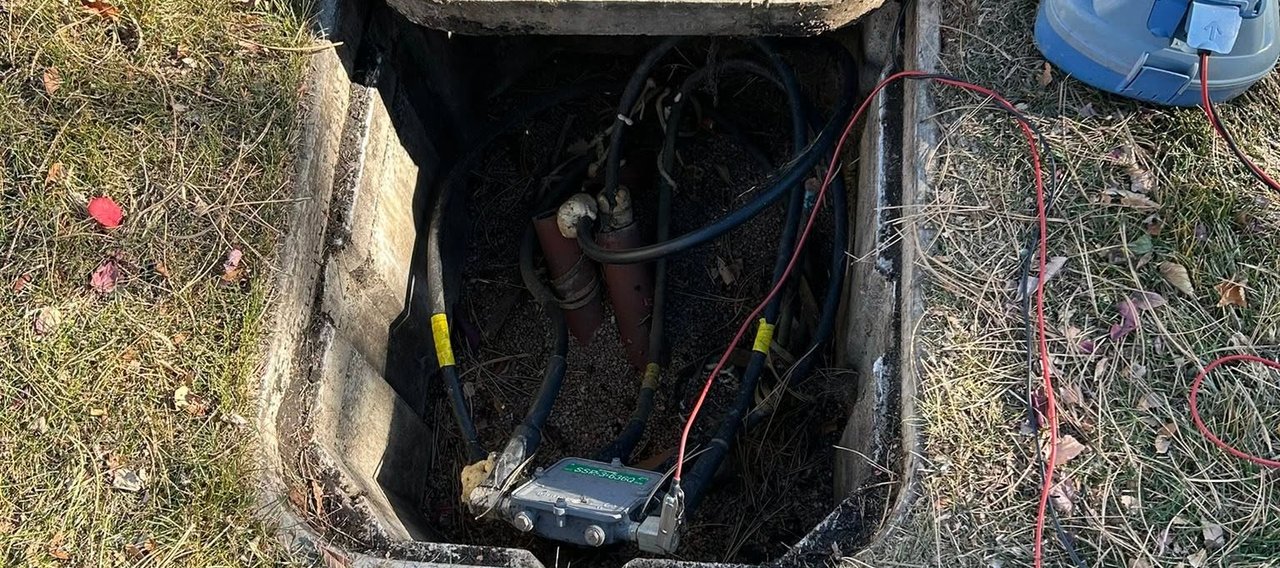
Disconnect both ends of the affected line if you can safely do so, at the breaker, the fixture, or the meter pedestal. A live or connected line is the single biggest reason a fault gets mis-located, since the equipment can't isolate a break in a wire that's still carrying current or looping through another device. If you're not sure how to safely disconnect it, leave it and just call. Guessing where to dig from the symptom alone usually means digging in the wrong spot, and sometimes creates a second problem on top of the first.
How We Find It
A locate uses the wire itself as the trail. In active mode, a signal gets applied directly to the line and a receiver tracks where that signal stops or changes, which is the fault. In passive mode, the equipment reads what the line is already carrying, useful for a faster general read before narrowing in with active mode. Either way, the result is a specific spot marked on the ground, not a general area to start test-digging.
Communications and fiber lines get traced the same way, though the equipment and signal type differ from a standard electrical fault. If your issue is a dropped internet or cable connection rather than a dead power circuit, mention that when you call so the right setup comes out to your site.
Fix It the Same Visit
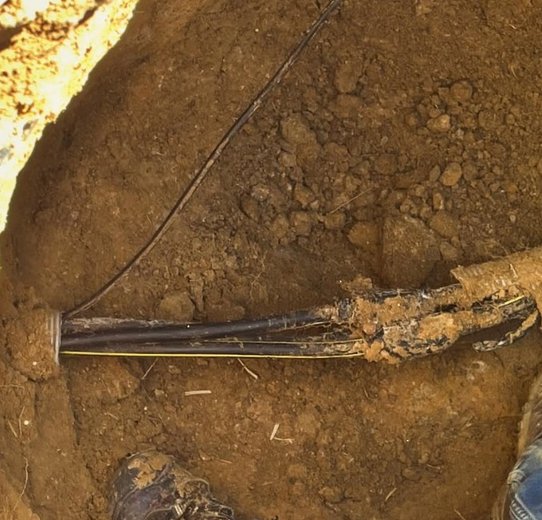
Once the fault's marked, the repair can often happen right there instead of waiting on a second appointment with a different crew. Digging it up and repairing it is a flat $1,000, parts included, on top of the $250 locate. That's not standard with most fault-locating companies, who hand you a marked spot and a bill and leave the digging and splicing to someone else.
If there's more than one fault on the line, they have to be handled one at a time: the first has to be fixed before HPLS can locate the second, and the same goes for each one after that. Worth knowing upfront if you suspect the problem isn't just a single break.
Pricing
$250 per fault to locate the break. If you want HPLS to dig it up and repair it, that's a flat $1,000, parts included, decided before anyone starts digging.
If this is happening right now, call (720) 318-1541 rather than waiting on a form. If it can wait for a normal callback, use the contact form instead. Planning a project rather than troubleshooting one? Our residential and commercial pages cover locating before you dig.